
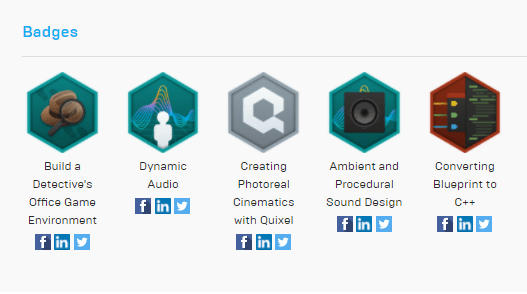
I decided to take some time off from developing BvB (my upcoming indie game) to complete the 5 courses from Epic’s Unreal Engine 2020 Online Learning Challenge. As someone who has been working with and learning Blueprints for the past 4 years, I was curious to learn some new things that I haven’t tackled yet in my game, but also felt my feedback and thoughts on the different courses may be helpful for others learning UE4, or trying to figure out if a Course is right for them.
Detective’s Environment – Recommend for Artists, Set Dressers, Level Artists/Designers

This course is great for anyone who is interested/focused more on the artistic side of game development. It touches on importing blocked out spaces from Maya/3DS Max – briefly mentions the powers of 2 systems and why it’s important to work with grid/scale, and continues on to set-dressing an entire space to AAA visual quality using lighting, texturing, light-map and so on. A nice course for anyone looking to flex their artistic muscle whilst also learning some useful UE4 functionality.
Ambient and Procedural Sound Design & Dynamic Audio (2 courses) – Recommended for anyone learning UE4 who want to increase their understanding of Blueprints, or looking to make playable, living levels.
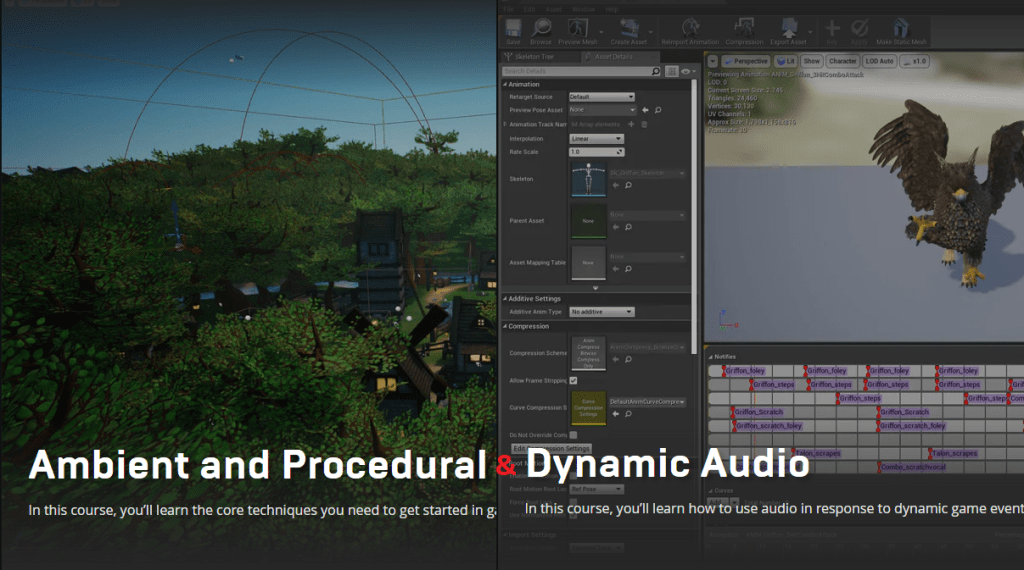
Even though this 2 part course is focused mostly around Audio design, it actually covers a variety of very powerful and useful functionality within UE4. Everything from Blueprint casting, variable usage, level design concepts such as blocking/trigger volumes, and so on. The amount of useful information in these 2 courses can’t be understated – almost all aspects of what makes Blueprints so powerful is covered – I highly recommend to anyone learning UE4, or even to those who think there might be something new to pick up here, because there likely is!
Converting Blueprint to C++ – Recommended for those with programming experience or those more interested in the Programming side of Game Development.
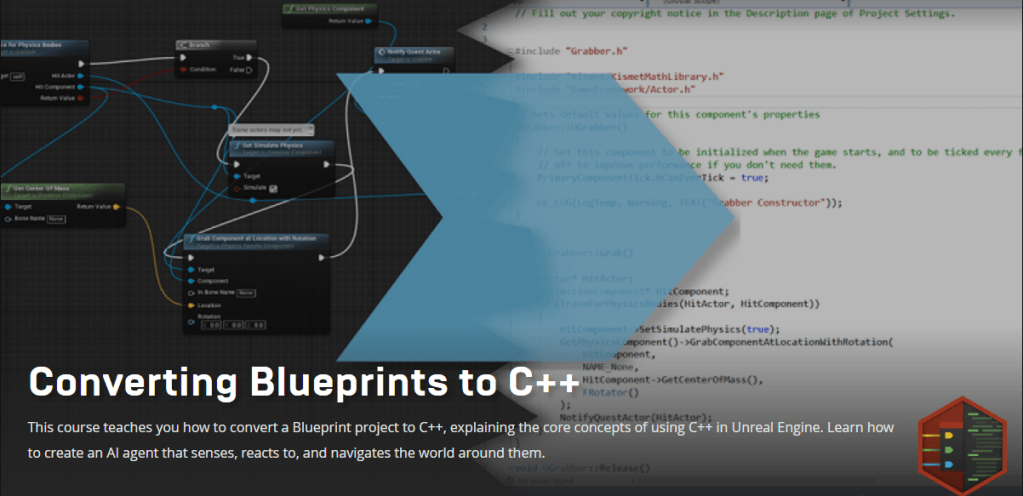
This course simply demonstrates how functionality within Blueprints can be transferred into C++. Admittedly, I am not much of a coder – but this course seems to benefit anyone unclear on the basic steps of creating/editing C++ files for UE4. This course would likely suit those interested in programming or already versed in C++, I would not recommend this course to a beginner or new UE4 user, as it’s much better to learn within UE4 and Blueprinting the capabilities and functionality of Unreal Engine. This Course does cover some very important information to learn before starting with UE4 however, such as the difference between Actors & Components, Functions & Events, and so on – this stuff is really key to grasp early on in UE4 development, but this information can also be found in the UE4 Documentation.
Creating Photorealistic Cinematics with Quixel – Recommended for Artists, or those involved or interested in Film/TV set design, backdrop
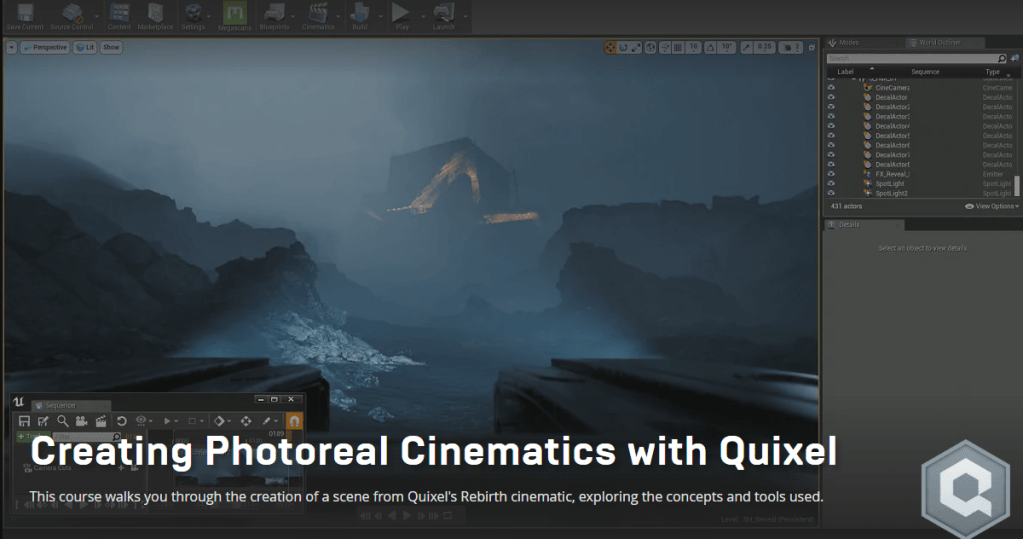
Oh Quixel, what a beautiful thing! Although this course is short and not so hands-on in UE4, it demonstrates the amazing possibilities of what photorealistic scans can do. Don’t be fooled either, this is just the beginning – with Unreal Engine 5, Quixel will take on incredible new potentials – allowing real-time scalability with real-definition assets will bring a whole new era of incredibly life-like visuals within videogames, film /TV and other digital content. Processes that are currently redundant and time-consuming (such as creating 3D assets from scratch, manually texturing, downscaling, manually creating LODs, so on) will likely be simplified within the next few years thanks to Quixel and Epic’s forward thinking.
Final Words:

The amount of useful content available on the UE4 Learning Site can’t be understated. Take some time to browse, download and complete any course you think you may be interested in. There’s so many intelligent people involved in the UE4 community now that you can find almost any answer you need very quickly, either on Epic’s sites, their Forums or other various sites(1, 2, 3). The courses provided by Epic will give you ample opportunity to reverse engineer various set-ups from them – which in itself can be a fantastic way to learn.

Of course there’s always the Unreal Documentation provided by Epic, with lots of key information that has been organized and displayed in a logical and easy to comprehend manner.
i.e. The Gameplay Framework section is absolutely key to understanding how Actors can cast(communicate) with each other.
Please feel free to reach out to me if you have any specific questions, as I’m always eager to help someone make their idea a reality in-game.
Cheers!
-Will
 LEVELDESIGN.XYZ