

Sometimes.. I see some kind of real-world layout and think “that would make a great segment in a CS map.”
Also sometimes.. I get a strong urge to block-out a CS map I’ve dreamed up in my head.
Fortunately.. blocking-out a CS map is something that can be done in a few hours, it’s just a matter of the method you take.
Plan! in 2D.
A good execution requires a good plan. Yes, you are building a 3D map, but you should be able to demonstrate the layout of it in a 2D form. Start by creating your top-down image of the map, keep it simple and easy to read. You know when Police draw an outline around a body using white chalk? Think of your map design as this – an outline, rather than a detailed breakdown of what’s inside.
Back in the day I would draw layouts on grid-paper – nowadays I just use Miro (as seen above)

Wide, Defined Strokes:
When a Painter creates a new piece of art, they don’t focus on the minor details immediately. Bob Ross didn’t start adding tree branches, leafs and birds flying-by, before painting the giant mountain and sky in the background.
The difference between Bob Ross painting and an expert Level Designer building aren’t as different as you may think, they both understand the importance and benefit of wide, defined strokes.
Forget the art, forget the setting, forget anything but the pure geometric layout. If you boiled the map down to the core components, what would that be? What is the core purpose of this space? What gameplay elements need to be defined within the space? How does the player move through the space?
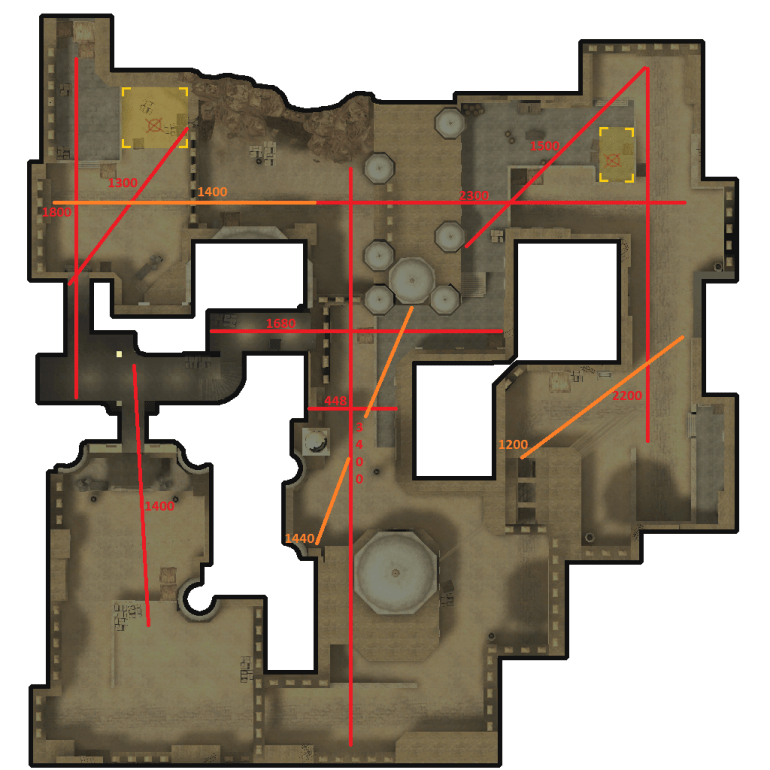
Imagine the layout of Dust2, anyone who has played the map likely can see it all in their head. Likely, you aren’t imagining the minor details, instead you’re envisioning the corridors of Mid, Long A or B Tunnels, or perhaps the bomb sites themselves.The geometry of the map. The flow of it.
Use The Grid.
(with modular “lego” pieces)
I see far too many aspiring Designers & Artists fall into the trap of not using the grid or modular pieces to their advantage. The importance and value of using the grid for snapping pieces together makes planning and building a map at least 10 times easier.
Think of Lego. Lego is a great example of modular design, where consistency and the size of pieces enable creation to be a lot easier. Imagine Lego only came in 1×1 blocks – and how difficult and time consuming it would be to build something! There’s a reason why the majority of Lego pieces are 2 cells wide. This is intelligent, modular design!
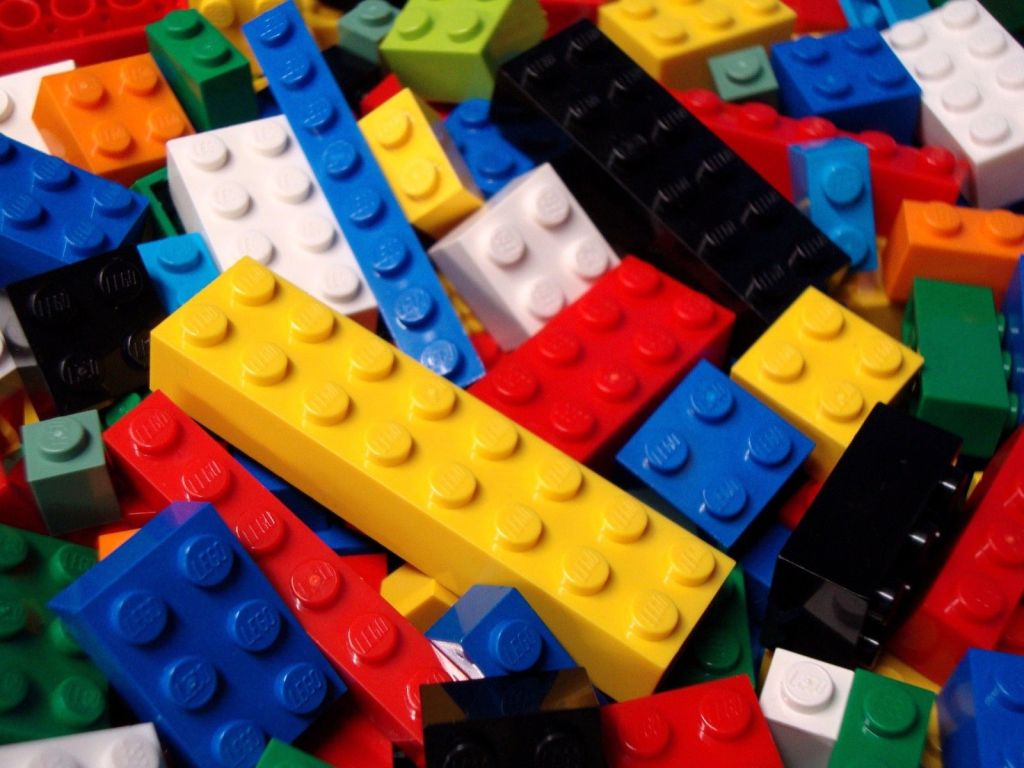
Building in Hammer (or any game editor, for that matter) is no different. You want to use the big pieces as much as possible before using smaller pieces. Big pieces are easier to adjust and move, whereas smaller pieces become time-consuming to adjust. If you use a lot of smaller pieces, when it comes time to make adjustments to the layout – you’ve created a whole lot more work for yourself.
So! Use consistent shapes and pieces, say a 128×128 block, rather than creating multiple larger or smaller blocks. Or in Unreal, use 1m or 2m cubes for your initial blockout.
Turning-on ‘The Blinders’:
Learning to ignore minor details or prioritize building your map with the biggest pieces first is the key to speed, efficiency and ultimately making adjustments when feedback is received and changes are needed.
If you spent a week detailing art around a bomb-site, adding textures or minor props to set the theme or mood, but then rework is needed – then there’s a good chance you’re working against yourself and making the process a whole lot harder on yourself.
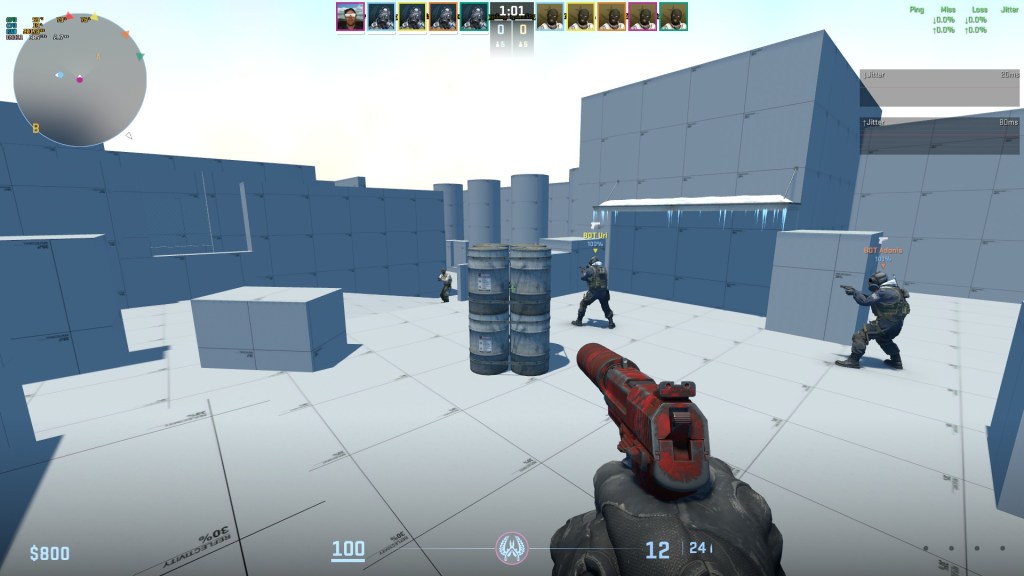
Instead, learn to ignore that desire to start adding details such as textures, art, or props – and instead focus purely on the geometry of the map. For initial playtests and feedback, the geometry alone is enough! If the map doesn’t work without all these extra things, then it won’t work with them either!
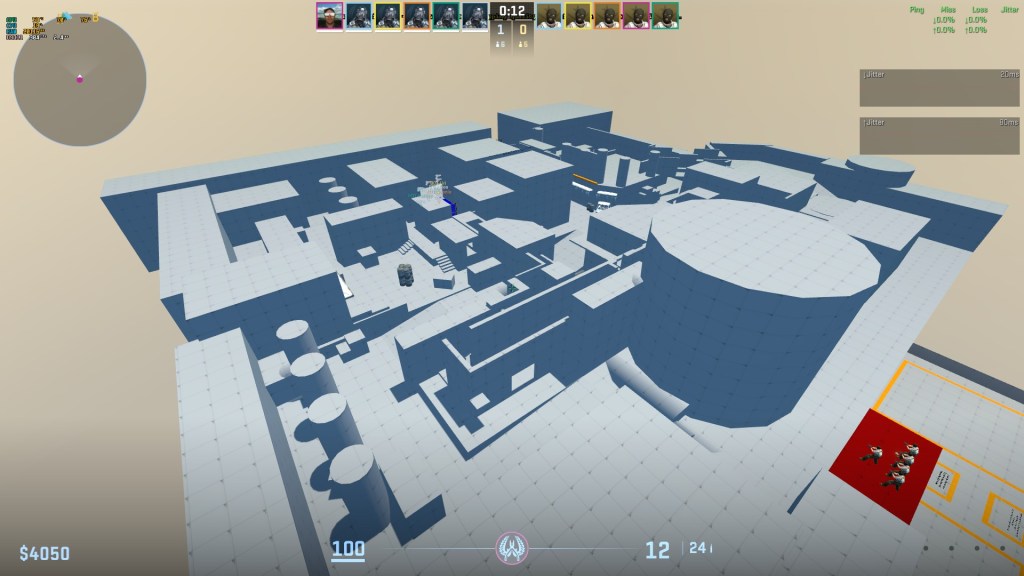
You absolutely do not need the theme, setting, atmosphere and other elements in place before initial playtests. Turn on the blinders, focus on wide, defined strokes.
K.I.S.S. – Less is more.
Keep It Simple, Stupid. Is some of the best advice and methodology / way of thinking when building something new. The more you can achieve with the least amount of pieces should be your goal.
Keep your ‘ingredient’ list as short as possible. What makes a map? Is it the props around the spawn areas, through middle, in the bomb sites? Is it the lighting? No. It’s the TIMINGS, the FLOW, the LINE OF SIGHTS. These things are the most important parts of the map, so no attention should be given to anything else until you’ve tested and proven these core elements.
No one is playing your map because it “looks cool” or “the setting is awesome”, what matters is the flow, the balance, the line of sights, the rotations, the flanks, and so on. The MORE you have in the map, the LESS likely you are to receive the feedback you want, for the most important elements – you need to force ‘The Blinders’ on for your playtesters as well!
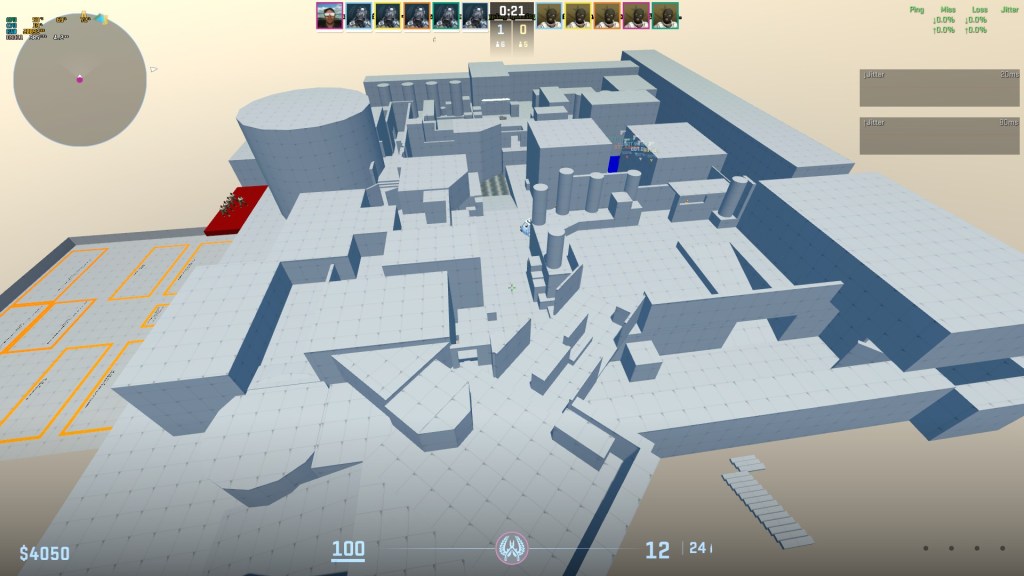
Core Elements:
Objectives (Bombsites or map control): The objective of any CS map is typically to take control of a bombsite, and plant the bomb, or to take control of a part of the map which then allows easier access to the bombsites, i.e. “middle” on most CS maps.
Rotations: The paths that allow players to change between which objective they are striving for, but also provides flanking routes for the opposing team. Rotations should be clean, i.e. not have a bunch of locations where the enemy can hide behind a wall or box, waiting to shoot you in the back as you pass by. It should also always be shorter for CTs to rotate to bombsites than for the Ts to on their side of the map.
Timings: The actual time, in seconds, it takes to reach each Bombsite or Objective. As a general rule, CTs should always reach locations (mid, bombsites) a couple seconds or more before Terrorists.
Contact/Engagement Points: These are often called battlefronts or first-contact-points – and should be highlighted for the players to naturally understand where they are. If players run from their spawn towards the enemy team, this is where they first make contact. On Dust2, when heading towards B-Site, it’s the long hallway known as ‘B-tunnels’, towards A-Site it’s ‘Long A’.
As you can see, these spaces are clearly defined (geometrically) as long corridors where the opposing teams are set to face each other directly as they encounter each other.
Line-of-Sights: Can include anything from what a player can see, how far they can see, or how many locations they need to cover. When building a map, line of sights should always be considered – as ‘information gathering’ is a key part of the gameplay of CS.
Trim the Fat.
3 Lanes. 2 Bombsites. This is what makes up a CS map. This is also why it seems so difficult for new CS maps to break-though into the community, many mappers try to break away from this proven formula, ultimately creating a lot of unnecessary space and area that doesn’t compliment the basic 3 lane, 2 bombsite setup.
If deleting a piece of cover or prop has little to no effect on the layout of the map, then this is a sign you’ve detailed past where you should have. You don’t need to create something completely original and awe-inspiring for people to play your map, you just need to create something that’s balanced. I’ve seen many beautiful maps fail to achieve design balancing.
Playtest, playtest, playtest!
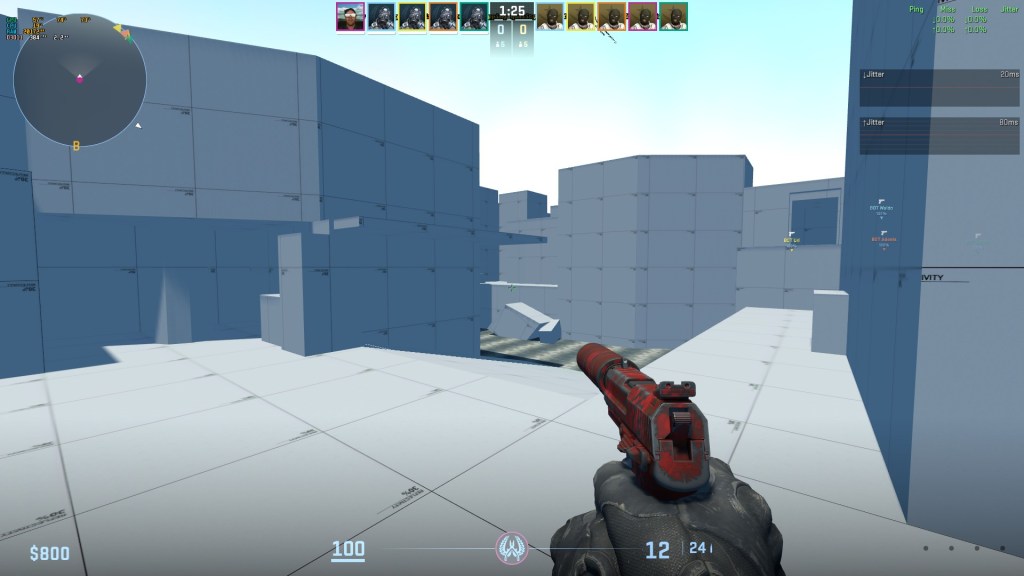
The only point in which you should move from what you see above (blocked out, un-textured) to doing an art pass + detailing the map is AFTER you’ve had plenty of playtests with plenty of feedback.
No one gets it right the first time, so don’t expect to. Join a mapping playtest discord group, setup a playtest, and get feedback. Don’t spend your time focusing on stuff that does not matter and stuff that you do not need feedback on.
Imagine building a house for the first time. Do you care what colour the walls will be painted when the actual frame of the house isn’t solid? What about what appliances you have when the walls aren’t even up yet? The same logic applies to map creation.
There’s an order to what you should do things in – and skipping ahead is never going to make things easier, in fact, it will just make it more difficult and frustrating, like trying to paint a wall when there’s no supports holding it up!
-More to come, Will
 LEVELDESIGN.XYZ